

Water Hardness
Water Hardness describes the level of naturally occurring dissolved calcium and magnesium salts which are present in water. Historically, the name comes from the laundering trade, where the water in some places allows you to easily raise a lather, but in other places, it is much harder to do so.
These salts are present in most natural waters to a greater or lesser extent, but when their concentrations are relatively high they can give rise to the formation of scale, which can be a serious operating problem in managed water systems.
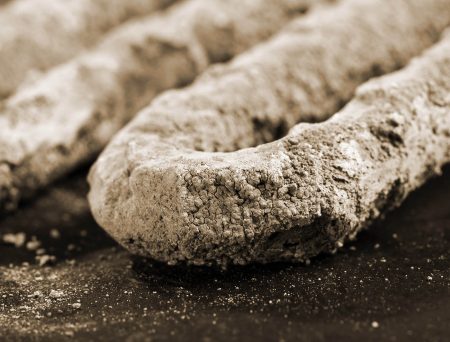
When water is boiled, the dissolved water hardness salts (calcium and magnesium) are forced out of solution in a process called "precipitation". These precipitated salts form a very thin layer on the metal surfaces, and these thin layers build up over time to make a strong, stratified coating which:
- Insulates the heater element and reduces its efficiency, which increases the cost of heating the water
- Increases pumping costs, because the bore of the water pipes gets narrower as the scale builds up
- Causes hot-spots on the heating element, often leading to catastrophic failure
Please visit our water softeners page to find out more.
What does a Softener do to Water Hardness?
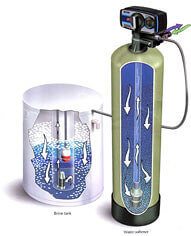
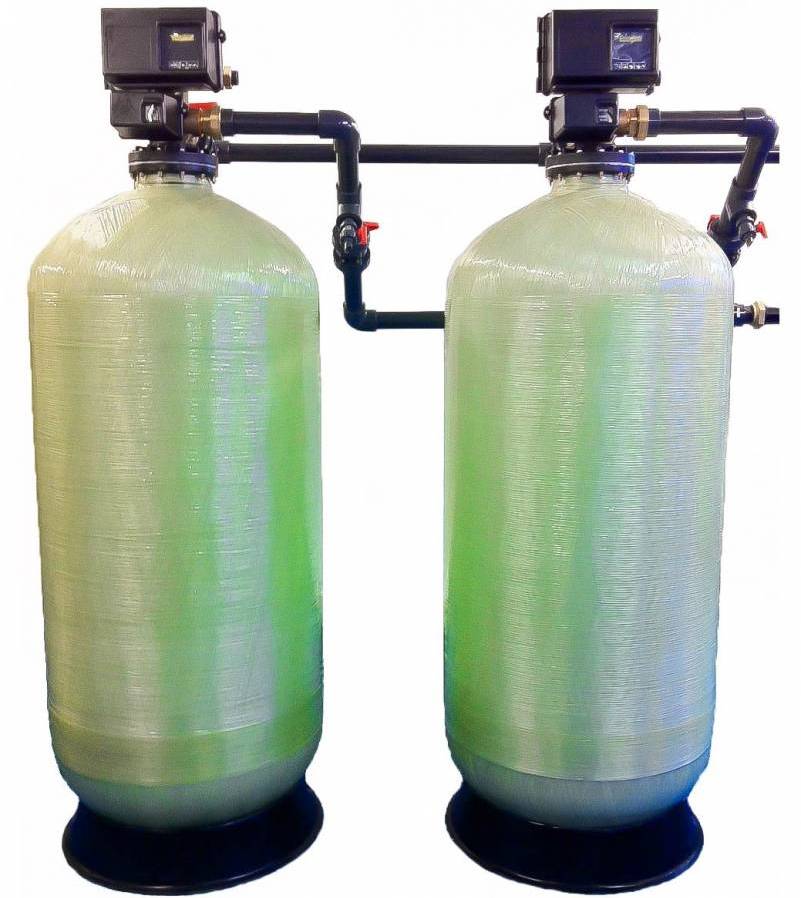
The most effective way to deal with water hardness is to replace it with something which has no such effect, and this is what a water softener does. The water softener contains a special form of "ion exchange" resin, which exchanges "soft" sodium ions for "hard" calcium and magnesium ions. This removes the water's scale-forming properties and it can then be safely boiled without creating precipitated hardness salts and all those problems associated with water hardness.
Once the ion exchange resin has been exhausted, it can be easily and economically regenerated using a strong brine solution. During this process, the accumulated hardness salts are rinsed harmlessly to ddrain and the softener is ready to start again.
Here to Help you
If you can't find what you're looking for, please do not hesitate to


.png)