Legionnaires Disease Prevention and Legionella Control and Treatment
Feedwater provide a comprehensive range of products and services for legionella control in water systems and are specialists in Legionnaires Disease prevention.
Because of the significant risk to public health associated with Legionnaires’ Disease and Legionellosis, the control of the bacteria or legionella treatment is regulated by health and safety law in the UK and many other countries. In the UK it is covered by the COSHH regulations and ACoP L8 published by the HSE - "Legionnaires' Disease: The Control of Legionella Bacteria in Water Systems - Approved Code of Practice and Guidance (L8)" (see link below to download).
Feedwater has vast experience in legionella treatment and we were helping in the prevention of Legionnaires' Disease before most people had even heard of it. We remain the only UK water treatment company with our own in-house UKAS-accredited laboratory for legionella testing and analysis. Because of our experience and our commitment to protecting public health we were founder members of the Legionella Control Association (LCA) when it was established as the Code of Conduct Association in 1999.
Legionella Control Services from Feedwater
We have a comprehensive range of products and have a dedicated team of consultants, scientists and technicians so we can provide cost effective legionella treatment and control services to meet your needs. Follow the links below to find out more.
- Legionella Risk Assessments & Log Books
- ACoP L8 compliance & Water Hygiene Services
- Water Analysis Service
- Legionella Sampling Service
- Legionnella Control Training
- Cooling Water Treatment
- Legionella Control with Chlorine Dioxide
Testing and Analysis
- Is your water system contaminated with Legionella right now? Find out in less than 24 hours using FASTEST™, our rapid screening method.
Here to Help you
Whatever your Legionella prevention needs contact us today – we can help you!
Other Downloads and Useful Links
Legionella Control Association (LCA)
- Click here to visit the LCA website
Download the current Legionella Control Association Code of Conduct
Download Feedwater's current Legionella Control Association registration certificate
Download Feedwater's LCA Statement of Compliance
UK HSE Legionella Regulations and Guidance
- What does the law say on Legionella control? Click here for summary information on the HSE guidelines.
- HSE Cooling Tower Legionella Safety Bulletin
Legionaires' Disease News & Prosecutions
- Click this link for the latest World news
- Click this link for the latest UK news
- Prosecutions happen often - click this link to see the latest.

Legionella Treatment with Chlorine Dioxide
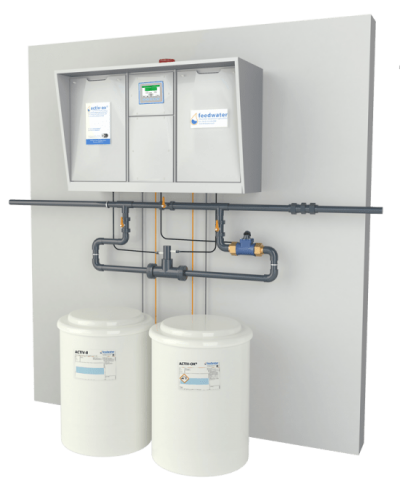
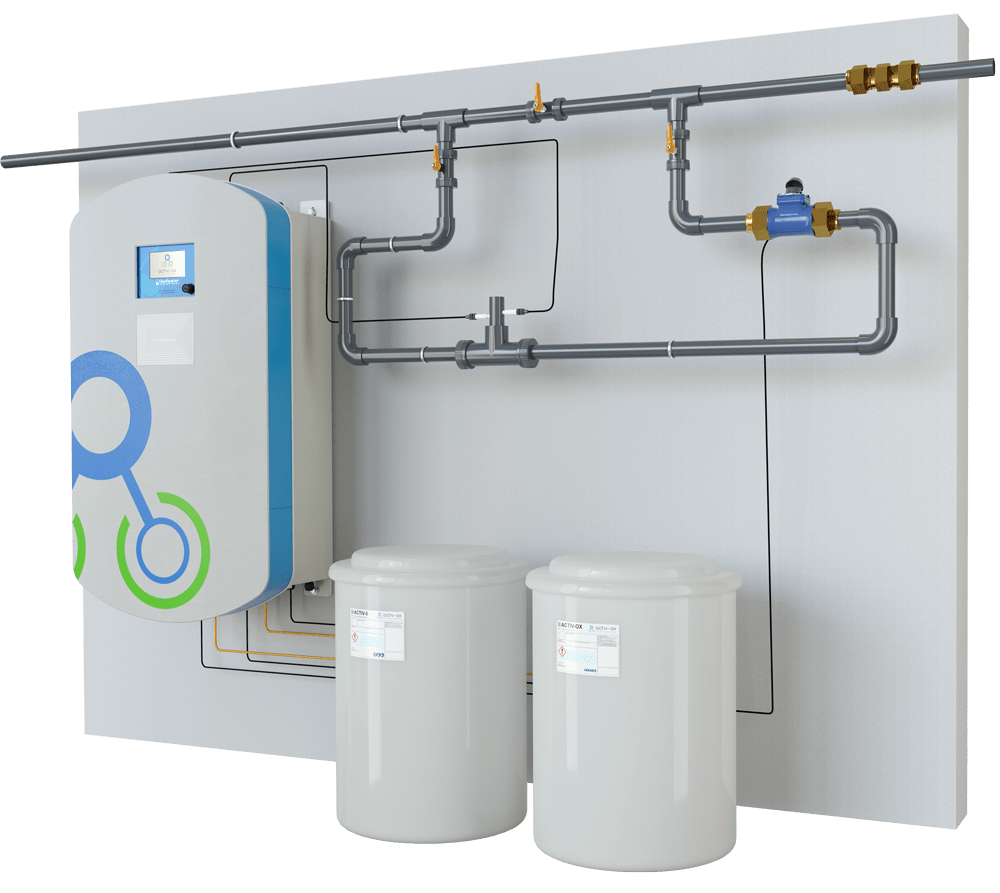
Consider a Chlorine Dioxide dosing system for your Legionella treatment, Feedwater's patented Activ-Ox system is safe simple and highly effective for disinfecting water systems from all manner of bugs and bacteria. To learn more about the FDA approved Activ Ox system and watch the video please visit our Chlorine Dioxide page.
What is Legionellosis and Legionnaires’ Disease?
Legionnaire’s Disease is a form of pneumonia caused by inhaling tiny water droplets (aerosols) which are contaminated with legionella bacteria. It is often fatal, but is wholly preventable. Legionellosis is the name given to a range of illnesses caused by legionella bacteria; as well as Legionaires Disease they include Pontiac fever and Lochgoilhead fever which are milder flu-like illnesses.
How do you get legionella in water systems?
Legionella bacteria are commonly found in natural water systems such as rivers and lakes where their numbers are usually low and they pose little risk. They grow over a temperature range of 20°C to 45°C. Below this temperature they survive dormant and as the temperature rises above 50°C they are progressively killed off and will not survive long at temperatures above 60°C. Their ideal growth temperature is around human body temperature, 37°C! Whilst legionella are widely found in the natural environment the risk comes when they contaminate man-made water systems, entering at low levels in the incoming water supply or in air-borne aerosols. Many man-made water systems not only provide the ideal environment for legionella to multiply but also involve water sprays which can release dangerous aerosols into the atmosphere.
What does legionella need to thrive?
As well as a water temperature of 20°C to 45°C legionella bacteria need a supply of nutrients which are usually provided by other microbes which are commonly found in the water. In particular there is a strong relationship between biofilms (microbial slimes), amoebae and the growth of legionella. Biofilms flourish in warm, stagnant water. As a general rule legionella likes dirty systems which are fouled with corrosion products and scale and dislikes clean water systems.
Breaking the Chain!
There is a four step chain of events which need to take place for someone to catch Legionnaires’ disease and which provide the basis of assessing and minimising the risk. If this chain is broken at any point you will prevent legionella disease.
Step 1 – A water system becomes contaminated with legionella bacteria
Certain water sources, such as untreated river or canal water, are more likely than others to contain legionella bacteria and will therefore increase the risk. However, it is not safe to assume that a treated incoming water supply is free from legionella and indeed you should assume that all water systems will become contaminated with low levels of legionella at some point.
Step 2 – Legionella multiply within the water system
Whilst it may be almost impossible to prevent a water system being contaminated with low levels of legionella it is entirely possible to prevent them multiplying to dangerous levels and it is important therefore to devise control measures to control their growth. The nature of those control measures will vary from system to system. In the case of domestic water systems this will involve keeping the hot water hot and the cold water cold and avoiding warm water conditions. In the case of a cooling tower this will involve an effective chemical water treatment programme. In all cases it will involve trying to avoid stagnant water conditions and keeping the water system clean and free from a build-up of deposits.
Whilst addressing all of the links in the chain is important, preventing legionella multiplying is undoubtedly the most important.
Step 3 – Contaminated aerosols need to be released to the atmosphere
It doesn’t matter how many legionella a water system contains if they are never released as an aerosol that someone can breath-in. A legionella risk assessment should therefore consider what the potential is for aerosols to be produced during both normal and abnormal usage (such as maintenance). Aerosols are generated by water sprays, air bubbles bursting through the water surface and by water splashing against a hard surface. In certain instances it may be possible to eliminate the risk by eliminating the process that produces the aerosol, or by reducing the quantity of aerosols that are released, but in many instances such as a domestic shower that isn’t possible and therefore the risk has to be minimised by focussing on preventing the multiplication of legionella within the water system.
Step 4 –Susceptible people inhale contaminated aerosols
The final step in the chain is for a susceptible person to breath-in enough contaminated aerosols to cause legionellosis. Individuals’ susceptibility varies and there are a number of factors which increase it:

- Men are 2 to 3 times more susceptible than women
- Increasing age - (people over 45 are generally more susceptible)
- Existing poor health - Smoking, alcoholism, diabetes, cancer, respiratory conditions etc.
A risk assessment needs to consider whether the population who potentially might be exposed are particularly susceptible, such as a hospital or elderly persons home, and whether the location of the system means there is greater potential for more people to be affected such as a city centre.
Legionella Treatment help from Feedwater
We can help you to assess the risk of your water systems and devise and implement effective legionella control measures.


.png)